MTS Urent

MTS Urent

Urent
Advertisement
4.2
Auto & Vehicles
10,000,000+ Downloads

Click to download now, finish the installation quickly, and directly unlock the "all-round experience"

Advertisement

Screenshots
Screenshot
Screenshot
Screenshot
Screenshot
Screenshot
Screenshot

About This App

πŸ† Expert Verdict & Overview

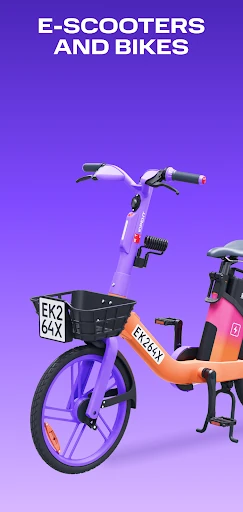
MTS Urent presents itself as a direct challenger in the competitive urban micro-mobility space of the Auto & Vehicles category. It is not a navigation or vehicle management tool in the traditional sense, but an app focused on frictionless access to shared e-scooters and e-bikes. Its key proposition aligns with the core demand for this market segment: providing a fast, convenient, and technology-driven solution for last-mile transportation in major urban centers. The app's integration with MTS Premium and its multi-platform availability indicates a strategic push for broad adoption.

πŸ” Key Features Breakdown

  • Frictionless Onboarding: By requiring only a phone number and bank card, the app dramatically lowers the barrier to entry, targeting impulse users and reducing sign-up abandonment.
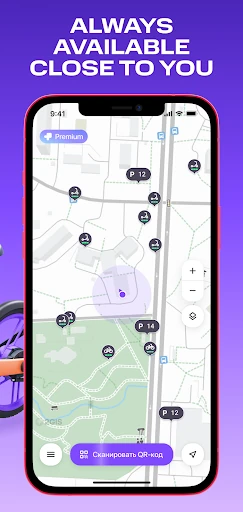
  • Real-Time Fleet Visualization: The in-app map displaying available vehicles solves the primary user anxiety of "Is there a scooter near me?" enabling immediate trip planning and decision-making.
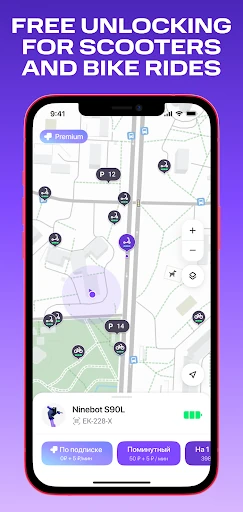
  • QR-Code Activation: This streamlined method replaces manual code entry or Bluetooth pairing, reducing on-the-spot friction and making the rental process intuitive and fast, even for first-time users.
  • Multi-Rent Function: Directly addresses a key social use-case, allowing a single user to rent multiple vehicles for a group, removing the need for each person to have the app installed and registered on the spot.
  • Standby Mode: Solves a critical pain point in traditional short-term rentalsβ€”the inability to make a quick stop without ending the trip and risking vehicle availability. This adds a layer of practical convenience for errands.
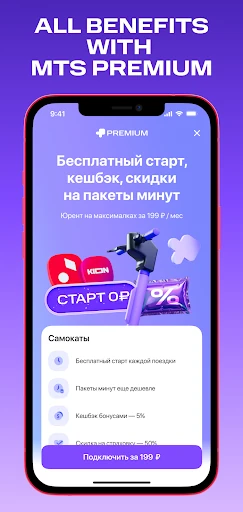
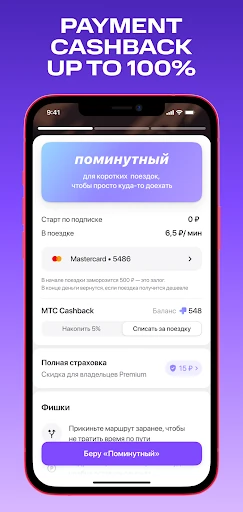
  • Integrated Loyalty & Cashback (MTS Premium): Creates a compelling ecosystem lock-in, incentivizing repeated use and fostering user retention through tangible financial benefits tied to the parent telecom service.

🎨 User Experience & Design

For the Auto & Vehicles category, specifically micro-mobility, the paramount UX principles are speed, clarity, and reliability. MTS Urent's description suggests a UI built around a primary map view, which is the industry standard and correctly prioritizes location-based functionality. The step-by-step process outlined (find, scan, start) indicates a linear, task-oriented UX designed to minimize cognitive load. The successful UX here depends heavily on the app's performance: the map must update in real-time, QR scanning must be instantaneous, and the rental/return process must be foolproof. Any lag or confusion at these critical junctions would severely degrade the core value proposition of "simple, pleasant and fast" transportation.

βš–οΈ Pros & Cons Analysis

  • βœ… The Good: Boasts a streamlined, low-friction user journey from discovery to rental.
  • βœ… The Good: Offers valuable, user-centric features like Multi-Rent and Standby Mode that enhance real-world utility.
  • βœ… The Good: Leverages the MTS ecosystem for potential perks and broader customer reach.
  • ❌ The Bad: Service is geographically limited to specific cities, excluding a vast potential user base. This is a common but significant growth barrier.
  • ❌ The Bad: Success is intrinsically tied to external factors: vehicle availability, maintenance, and urban infrastructure (designated parking). A poor hardware experience can tarnish the app's reputation.
  • ❌ The Bad: Mention of varying city rules adds a layer of complexity; users must actively seek out local terms, which could lead to unintentional violations or charges.

πŸ› οΈ Room for Improvement

For its next major update, the development team should focus on predictive and assistive features. Implementing a more advanced battery range estimator that factors in rider weight and route topography would reduce the risk of stranded scooters and user frustration. Introducing a "Destination Mode" that highlights recommended parking zones along a user's plotted route would proactively encourage proper parking compliance. Furthermore, expanding the in-app informational hub to dynamically display the specific rental rules for the user's detected city would enhance clarity and trust, moving beyond a simple link to an external website.

🏁 Final Conclusion & Recommendation

MTS Urent is highly recommended for urban dwellers and commuters in its serviceable cities seeking a flexible, tech-enabled alternative to walking, public transit, or rideshares for short trips. It is perfectly tailored for the spontaneous user, the social rider with friends, or the daily commuter completing the last segment of their journey. The app successfully digitizes the scooter-sharing process with thoughtful features. However, its ultimate value is a partnership between the software's efficiency and the reliability of the physical fleet. For users within its operational network, it represents a compelling and competitive mobility option.