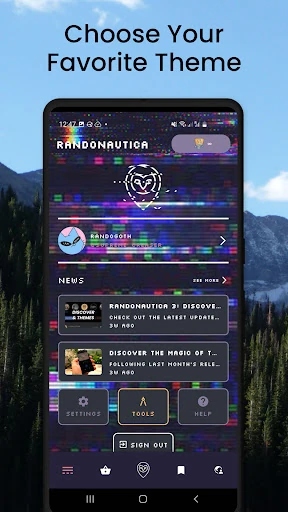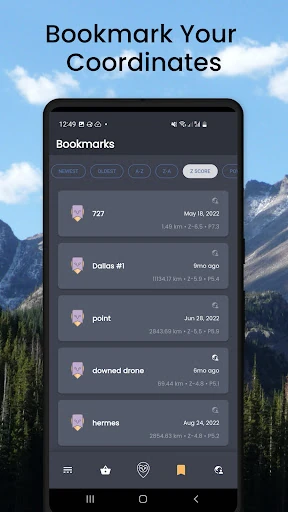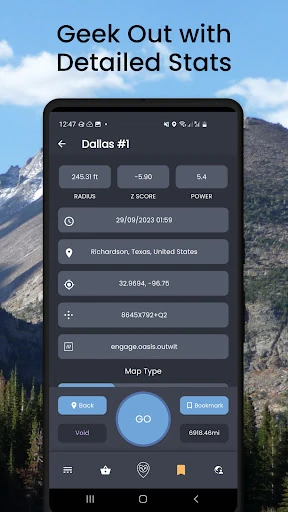
Click to download now, finish the installation quickly, and directly unlock the "all-round experience"
About This App
đ Expert Verdict & Overview
Randonautica occupies a genuinely unique niche within the Travel & Local category, effectively redefining exploration for the digital-native generation. It transcends conventional map and guidebook apps by leveraging the allure of quantum randomness and conscious intent to drive real-world discovery. By framing location generation as a personal experiment in consciousness and probability, it transforms mundane travel into a deliberate, philosophical, and often thrilling adventure. The app successfully bridges a meta-physical concept with practical local movement, creating a novel and sticky user proposition in a mature market.
đ Key Features Breakdown
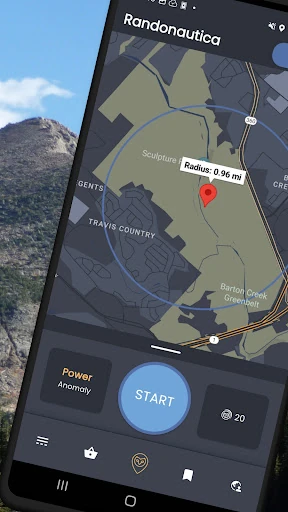
- Quantum & Pseudo-Random Point Generation: This is the appâs core mechanic. By pulling from quantum entropy sources (or pseudo-random fallbacks), it provides coordinates that feel authentically "random" to the user. This solves the common problem of decision fatigue and habitual travel patterns, forcing exploration beyond one's comfort zone.
- Intention Setting & Anomaly Detection: Beyond simple randomness, users can set an "intention" before generating a point or choose "Anomaly" types. The algorithm then finds statistically improbable locations, creating a powerful narrative hook. This addresses the user's desire for meaning and personalized, potentially synchronicitous experiences in an impersonal world.
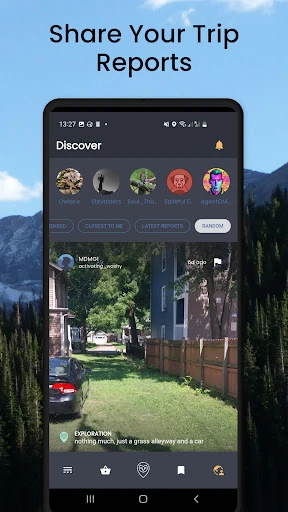
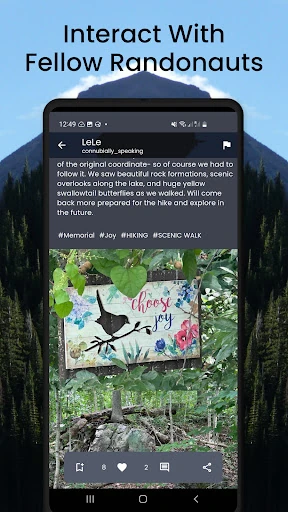
- The "Discover" Social Feed & Reporting: This feature builds a critical community layer. It allows users to document their journeys, share stories, and validate experiences with a global audience. This solves the problem of isolation in novel activities and fuels motivation through social proof and shared lore, turning individual trips into a collective phenomenon.
- Seamless Map Integration: Once a point is generated, users can open it directly in their preferred mapping service for navigation. This elegantly solves the core usability challengeâbridging an abstract, generated coordinate to a concrete, physical destination in a familiar interface.
đ¨ User Experience & Design
The app's UI adheres to a minimalist, almost utilitarian design, which suits its function. The primary user flowâsetting a radius and intention, generating a point, and navigatingâis straightforward and quick. For the Travel & Local category, this efficiency is a major strength; it removes friction between the decision to explore and the act of traveling. However, the UX around explaining the more complex theoretical concepts (quantum entropy, statistical anomaly algorithms) could be better integrated. A user's understanding of the process is largely based on supplemental community knowledge, which may create a slight barrier to entry for those not already initiated into the "Randonauts" lore. The design effectively focuses the user on the outcome: the destination and the journey, not the app itself.
âď¸ Pros & Cons Analysis
- â The Good: Unmatched concept that brings genuine novelty and philosophical depth to local exploration.
- â The Good: Fosters a strong, engaged global community that enhances the core experience through shared storytelling.
- â The Good: Directly combats routine by algorithmically forcing users out of their "probability tunnel."
- â The Bad: The scientific and theoretical underpinnings are presented convincingly but remain abstract and unproven, which may deter skeptical users.
- â The Bad: The experience is highly dependent on user mindset and location; a "dull" generated point in a familiar area can lead to disappointment.
- â The Bad: Potential safety concerns if users are not cautious about where and when they choose to follow generated coordinates.
đ ď¸ Room for Improvement
The next major update should focus on refining the educational on-ramp for new users. A brief, elegant interactive tutorial explaining the different point types (Blind Spot vs. Attractor vs. Void) and the concept of intention would lower the initial learning curve. Additionally, integrating basic safety featuresâsuch as a one-touch option to share your destination and ETA with a trusted contact before embarkingâwould be a responsible and valuable addition. Finally, incorporating more local data layers (like points of interest or public art) into the post-generation view could provide context and enhance the discovery aspect without spoiling the randomness.
đ Final Conclusion & Recommendation
Randonautica is not a general-purpose travel app; it is a highly specialized tool for a specific audience. It is ideally suited for curious individuals, urban explorers, and those interested in mindfulness, psychology, or unconventional philosophies who feel stuck in their daily routines. It is recommended for users seeking a structured yet open-ended excuse to walk, observe, and re-enchant their local environment. Ultimately, Randonauticaâs greatest value is as a catalyst for conscious presence and spontaneous adventure, making it a compelling download for anyone looking to view their surroundings through a new and unpredictable lens.